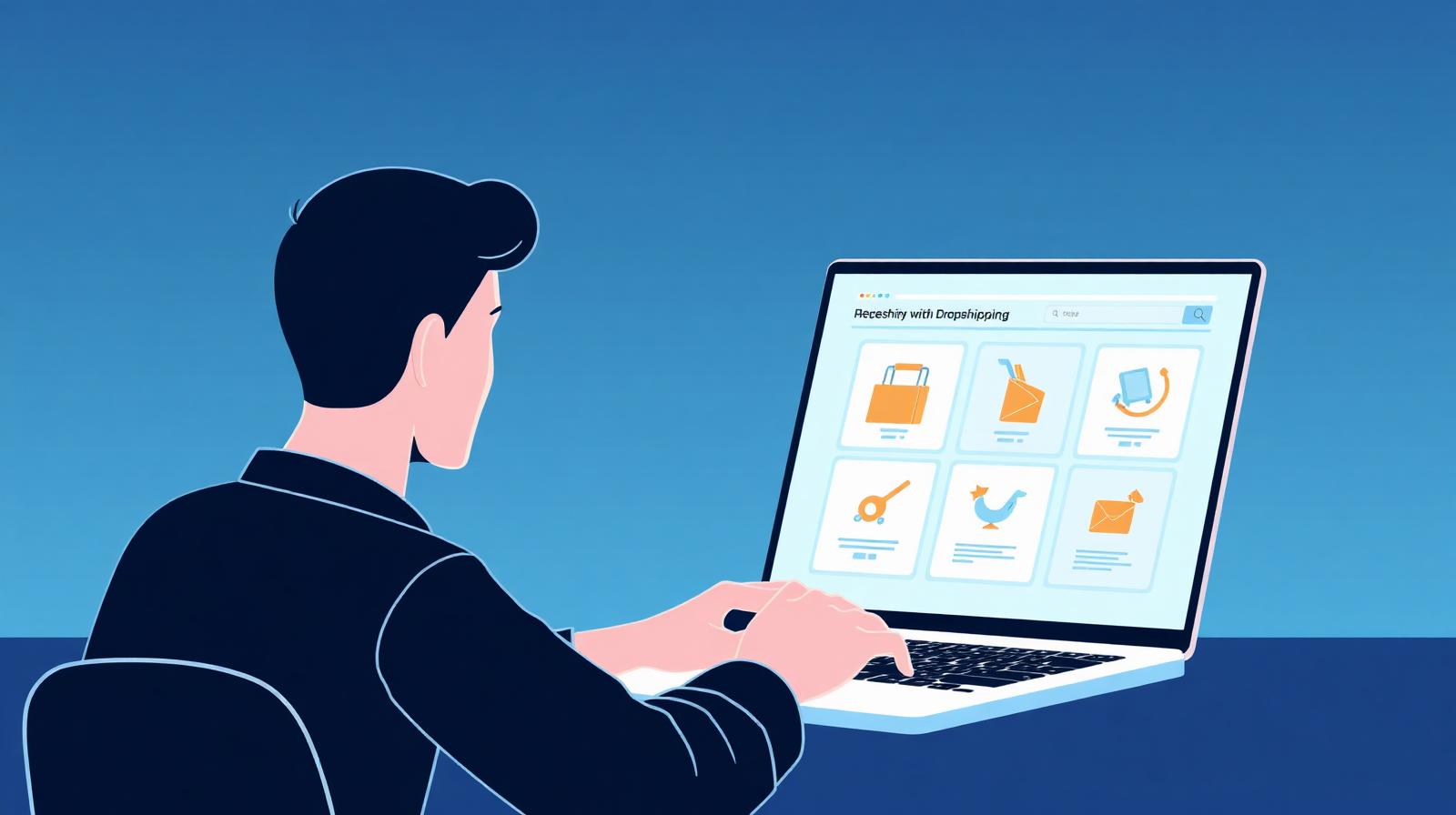
The two layers of a dropshipping platform
Every dropshipping business runs on two platforms, not one. The store platform is what your customer sees and pays on. The supplier platform is what receives the order, sources the product, and ships it.
You pick them separately, and the pairing matters more than either choice alone. A great store on a bad supplier still ships in 21 days. A great supplier on a clunky store still converts at 0.6%.
- Store platforms: Shopify, WooCommerce, Wix, BigCommerce, Squarespace, TikTok Shop.
- Supplier platforms: AutoDS, Zendrop, CJdropshipping, Spocket, DSers, Sell The Trend, plus private agents.
Pick the store platform first. Suppliers can be swapped in a day. Store platforms are a migration.
Store platforms compared
For a US, UK, or EU beginner running paid ads in 2026, the shortlist is Shopify, WooCommerce, and TikTok Shop. Everything else has a specific reason to exist, but none of them are default choices.
- Shopify. $29 to $79 per month. The default choice. Fastest to launch, largest app ecosystem, cleanest checkout. Transaction fees if you do not use Shopify Payments.
- WooCommerce. Free core, $10 to $40 per month for hosting and plugins. Cheapest at scale, but you own hosting, security, and every broken plugin. Not recommended for your first store.
- Wix eCommerce. $27 to $59 per month. Nicer editor than Shopify, weaker checkout and app ecosystem. Fine for brand stores, weak for high-volume paid traffic.
- BigCommerce. $39 to $105 per month. Better built-in features than Shopify, smaller ecosystem. Worth looking at if you sell 100+ SKUs.
- TikTok Shop. Free to join, 8% to 12% commission per sale. Not a replacement for your own store, but a second sales channel that captures buyers who never leave the app.
Supplier platforms compared
Supplier platforms sit between your store and the factory. They import products, sync inventory, and route orders. The right one depends on shipping speed and margin expectations.
- AutoDS. $27 to $67 per month. Best all-round tool for beginners. Amazon, AliExpress, CJ, and US warehouses in one dashboard.
- Zendrop. Free tier plus $49 to $79 paid plans. US-warehoused products with 5 to 8 day shipping. Higher unit cost than AliExpress, better refund rates.
- CJdropshipping. Free to use, per-order fees. Widest catalog, real agents, direct China sourcing. Best once you know what you are selling.
- Spocket. $40 to $100 per month. US and EU suppliers, faster shipping, premium pricing. Good for brand-style stores, not for cheap impulse products.
- DSers. Free to $50 per month. The official AliExpress partner. Cheap and reliable if you accept AliExpress shipping times.
- Sell The Trend. $40 to $100 per month. Product research plus fulfillment in one. Useful if you also want the discovery layer.
Under $50k/month: AutoDS or Zendrop. Over $50k/month on one product: switch to a private agent through CJ.
The 3 combos that actually work in 2026
- Beginner, testing lots of products: Shopify + AutoDS. Fast to launch, fast to swap products, one dashboard.
- Scaling one winner past $30k/month: Shopify + Zendrop (or a private CJ agent). Faster shipping and lower refund rates matter more than a $2 unit cost saving.
- Native TikTok product: TikTok Shop + Zendrop US warehouse. The buyer never leaves the app and the product ships in a week.
How to pick your platform in 15 minutes
You do not need a spreadsheet. Answer four questions honestly and the answer usually picks itself.
- Are you running paid ads to a real product store? If yes, default to Shopify. Everything else costs you conversion rate.
- Are you shipping to the US or EU? If yes, your supplier plan must include US or EU warehousing. AutoDS, Zendrop, and Spocket qualify. Raw AliExpress does not.
- Is your first product on TikTok? Add TikTok Shop as a second channel from day one.
- Are you a WordPress developer or a total non-technical operator? Only the first group should touch WooCommerce.
What it actually costs to run
Real monthly cost for a working beginner setup in 2026, before ad spend:
- Shopify Basic: $29
- Domain: $1
- Supplier platform (AutoDS or Zendrop starter): $27 to $49
- Email tool (Klaviyo free tier under 250 contacts): $0
- One paid theme or key app: $0 to $30
- Total: roughly $60 to $110 per month, plus per-order product cost and shipping.
If a guide tells you a full dropshipping stack costs under $30 per month, they are hiding the supplier cost.
5 platform mistakes that cost real money
- Starting on WooCommerce to save $29, then paying a developer $500 to fix a checkout bug.
- Running AliExpress-only shipping to US buyers, then losing 15% of orders to chargebacks after week 3.
- Building on a page-builder platform (Wix, Squarespace) with a slow checkout, then wondering why the conversion rate is 0.4%.
- Migrating store platforms mid-scale. It always costs a week of sales and a lot of SEO.
- Locking into one supplier before you have a proven product. You need the option to switch fast when refunds start.
Validate the product before you commit to the stack
The best platform pairing cannot save a weak product. Before you spend an hour picking apps, run any product you are considering through a real validation checklist. Skoute grades one product URL against demand, margin, saturation, and risk in about 60 seconds. Start with our free product check, then use the winning-product criteria checklist to score the top candidates.
For the wider picture of how platforms fit into product research and testing, see the dropshipping product research pillar guide.