The pattern almost every losing store follows
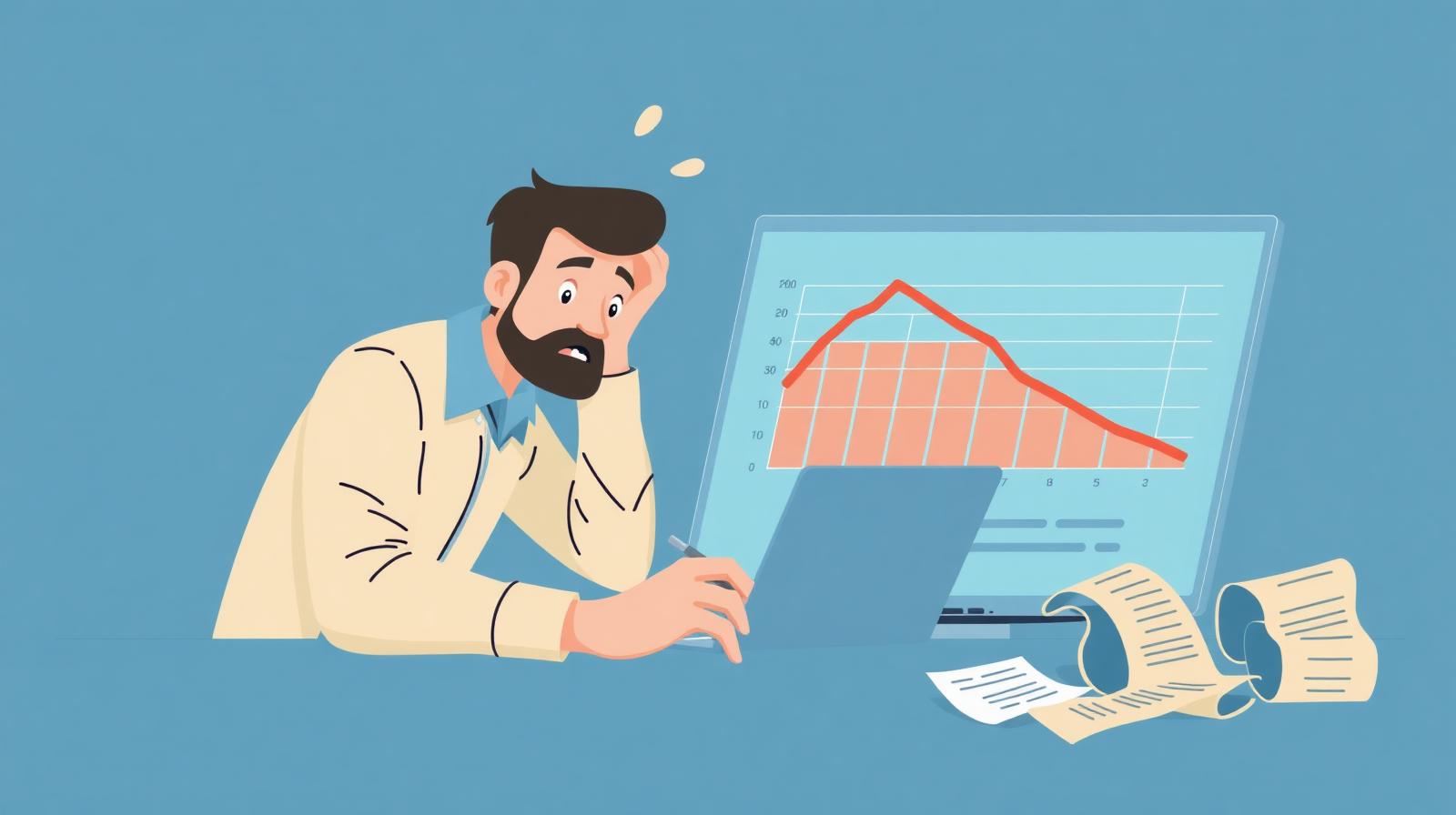
Same loop, different person, hundreds of times a week: a beginner sees a product on TikTok with 4 million views. They drop it on Shopify, build a page in an afternoon, launch a 50 EUR ad set, and wait. Three days later: 2 add-to-carts, 0 sales, account suspended for the third time, 180 EUR gone. They blame the algorithm, the niche, the agency theme.
It is almost never the algorithm. The product was already losing before the campaign launched. The decision to test it was the actual mistake.
The loss happens at product selection, not at ad delivery. Fix the selection step and 70 percent of the "ads do not work" problem disappears.
Why this keeps happening (it is not your fault)
Most dropshipping content trains people to find products, not to evaluate them. "10 winning products this week" videos rack up views because they feel useful. They are not. A list of products with no decision framework is just a list of expensive opinions.
There are three structural reasons beginners keep losing money on selection:
- Survivorship bias: the "winning product" lists you watch are filtered by hindsight. The 95 percent that flopped do not get posted.
- No fixed criteria: without a checklist, every product looks like a winner when you are excited and a loser when you are tired.
- Speed pressure: "first to a winner" is a myth. Speed without validation is just faster losing.
What the operators actually making money do differently
Spend any time around real 6 and 7-figure dropshippers and you notice the same thing. They are not faster at finding products. They are slower at committing to them.
Here is what their workflow actually looks like, stripped of the influencer drama:
- They keep a running list of 50 to 100 product candidates at any time, not a desperate weekly hunt.
- Every candidate gets graded against the same fixed criteria, every time. No exceptions for "I just have a feeling about this one."
- They test 1 to 3 products per cycle, not 8. Each test has a pre-defined budget, window, and kill rule.
- They write down what they learn from every test, win or lose. That is the asset that compounds.
- They almost never fall in love with a product. They fall in love with the process.
Winners are slower at saying yes. That is the entire edge.
The real product research checklist (free, use it tonight)
Print this. Tape it next to your laptop. Run every product through it before you do anything else. If you do nothing else from this article, this checklist alone will save you more money than most paid courses.
- Margin: at your selling price, after COGS, shipping, fees, and a realistic 35 to 50 EUR CPM, do you keep 25 percent net? If no, skip.
- Pain in one sentence: write the customer's pain in one sentence in their words. "My phone falls when I cook" beats "a kitchen helper." If you cannot write the sentence, the angle is too vague.
- 5-second test: in 5 seconds of footage, can a stranger understand the product and feel something? If not, it loses on TikTok and Reels.
- Differentiation: open the AliExpress listing. Why would a customer buy your page over the supplier's? Be honest. "Mine has a nicer theme" is not an answer.
- Saturation: search the product on TikTok and Meta Ad Library. If 30 plus active stores are running near-identical creatives in your country, the bar is now extreme.
- AOV math: if your AOV is under 35 EUR, where is the upsell that gets you to 50? No upsell, no test.
- Fulfillment risk: shipping over 12 days, fragile items, or anything needing electrical certification will eat your margin in refunds.
- Trust surface: do you have real reviews, real before/after, a real story? If your store screams "AliExpress reseller," cold traffic will not convert no matter how good the product is.
Five golden gems most beginners never hear
If you take nothing else from this article, take these. Each one is a single sentence that quietly separates profitable operators from the rest.
- Views are the loudest, weakest signal on TikTok. Saves and link-asking comments are the real ones.
- An ad that has been running 30 plus days in the Meta Ad Library is almost certainly profitable. That is the closest thing to public P&L data you will ever get for free.
- If you cannot write the customer's pain in their own words, your creative will not connect, period.
- Your kill rules should be written before launch, not after. Otherwise you will always find a reason for "one more day."
- The best product you ever test will probably be one you were not personally excited about. The worst will probably be one you loved.
Internalize these five lines and you are already ahead of 90 percent of stores launching this month.
Where Skoute fits in (and where it does not)

Here is the honest pitch: the checklist above works. It is also slow. Running 20 product candidates through it manually is an entire evening. Most people do not do it, which is why they lose money.
Skoute is the shortcut. Paste any Shopify product URL into Skoute and you get a Skoute Score from 0 to 100, a breakdown across margin, virality, pain, differentiation, and saturation, plus suggested angles, the biggest risk to watch for, and a fastest-test plan. Same checklist, ten seconds instead of an evening.
Skoute will not pick products for you. It will not run your ads. It will not save a product you are emotionally attached to. What it will do is give you an honest second opinion on every idea before you spend a euro, so the only products that make it to your ad account are the ones that actually deserve to be there.
What to do this week (whether you use Skoute or not)
- Stop running ads on any product you have not graded against the checklist above. No exceptions.
- Open the Meta Ad Library, filter to your country, and find 5 products that have been running for 30 plus days. Study what they have in common.
- Pick your top 3 ideas, run them through the checklist, and write down the score. Test only the highest scorer.
- Pre-write your kill rules. CTR, CPC, ATC thresholds, and a budget cap. Promise yourself you will respect them.
- If you want the checklist automated, drop your top 3 product URLs into Skoute and compare scores in seconds.
You do not need a new course. You need to stop testing unvalidated products. The checklist above (manual or via Skoute) is the entire fix.
The honest bottom line
Dropshipping in 2026 is not dead, but the era of getting away with sloppy product selection absolutely is. CPMs are higher, customers are more skeptical, and saturation cycles are faster. The operators making money next quarter will be the ones who treat product validation as the most important job in the business, not the most boring.
The good news: the bar to join them is not talent or luck. It is a 5-minute habit, repeated. You can build it manually with the checklist above. Or you can let Skoute run it for you and reclaim your evening.
Either way, please stop testing products you have not graded. Your ad account will thank you.